

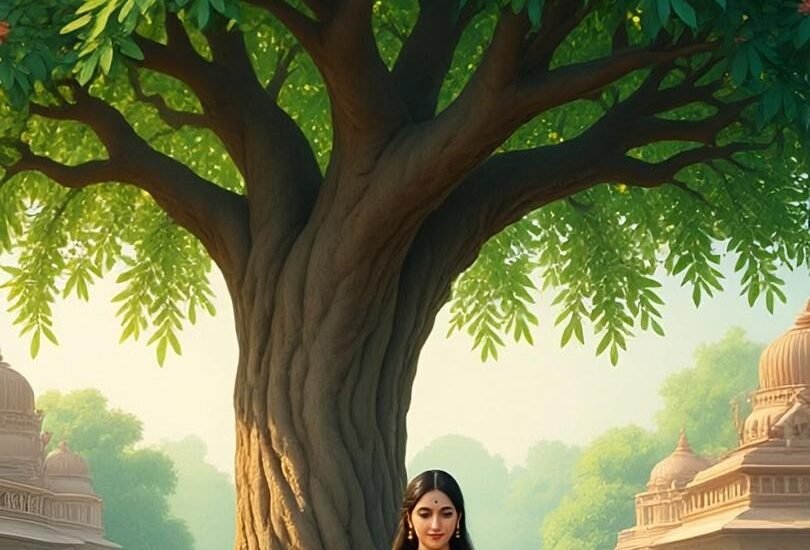
Of all the chapters in the Ramayana, Goddess Sita’s stay at Ashok Vatika in Sri Lanka stands out as the ultimate testament to human dignity, mental fortitude, and unyielding devotion. Surrounded by luxury she refused to touch and guarded by captors she refused to fear, her time in the imperial grove transformed a scenic paradise into a landscape of profound spiritual resistance.
The Sanctuary Refused
When King Ravana abducted Sita and brought her to his capital in Lanka, he initially kept her at Seetha Kotuwa (Mandodari’s palace enclosure). Hoping to win her affection through a display of unparalleled opulence, he offered her a place in his royal palace. Sita rejected it outright.
Choosing the dirt beneath the trees over a golden cage, she demanded to be kept outside under the open sky. Ravana subsequently moved her to Ashok Vatika, an exceptionally beautiful royal pleasure garden nestled in the cool, misty central highlands of modern-day Nuwara Eliya.
[ Ravana’s Palace Palace / Opulence ] ──► REJECTED BY SITA
│
▼
[ Ashok Vatika Cloud Forest / Earth ] ──► CHOSEN FOR PENANCE
Solitude, Devotion, and the Simshapa Tree
Though Ashok Vatika was renowned for its beautiful streams, exotic wildlife, and magnificent Ashoka trees, for Sita, it was a theater of intense spiritual penance (Tapasya).
The Blade of Grass: Whenever Ravana entered the grove to intimidate or woo her, Sita refused to look at him directly. Instead, she would pluck a simple blade of grass, place it between them as a barrier, and address the grass instead of the king. This simple blade signified that in her eyes, the emperor of Lanka held less value than a piece of straw.
The Simshapa Tree: Sita spent her days and nights sitting beneath a single Simshapa (Ashoka) tree, dressed in a single, soiled saffron saree. She completely disconnected from her surroundings, keeping her mind entirely anchored to the memory of Lord Rama.
The Guard Circle: She was surrounded 24/7 by a fierce circle of Rakshasis (demoness guards) instructed to psychologically break her spirit through alternate threats and flattery. Amidst them, only a guard named Trijata recognized Sita’s divinity, secretly providing her comfort and predicting Ravana’s downfall.
The Climax: A Token of Hope
The crushing loneliness of the grove was broken when Lord Hanuman, having breached Lanka’s coastal defenses, tracked her down by hiding in the canopy of her chosen tree. It was in Ashok Vatika that the historic meeting took place: Hanuman dropped Lord Rama’s signet ring into her lap, proving he was a genuine messenger.
In return, her eyes welling with tears, Sita handed Hanuman her Chudamani (a divine hair ornament) to take back to Rama—a token that she was alive, but that her time was running out.
The Living Heritage Today
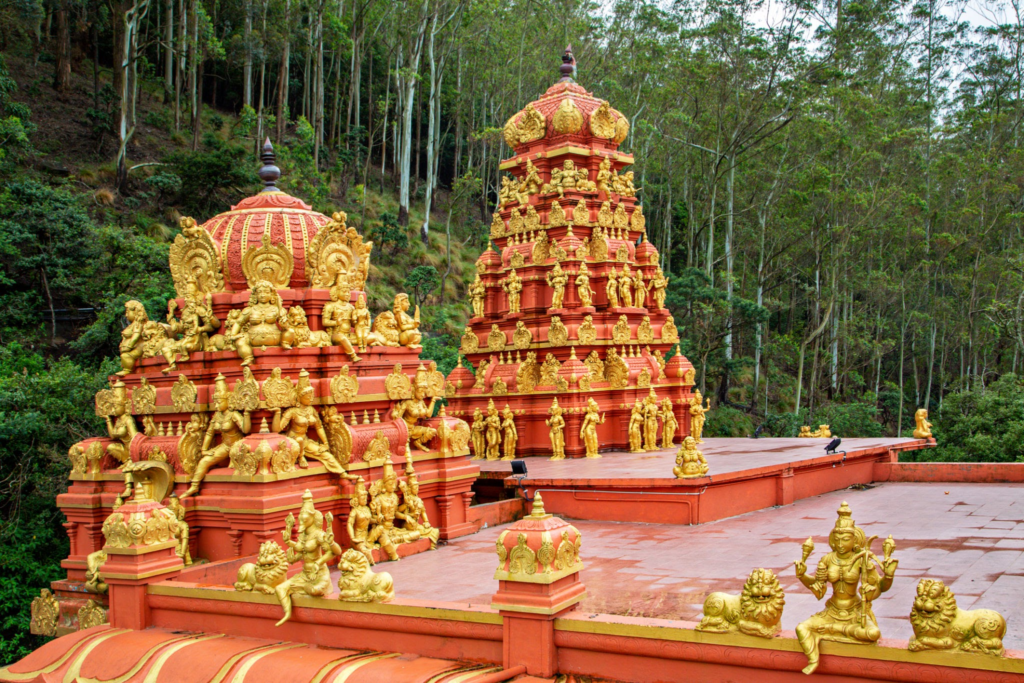
Today, the historic site of Ashok Vatika is anchored by the Hakgala Botanical Garden and the adjacent Seetha Amman Temple in Sri Lanka. The yellow-orange soil of the area, distinct from the surrounding geography, is locally believed to have been scorched when an angry Hanuman set fire to parts of the capital after meeting Sita.
Flowing past the temple is a clear mountain stream where Sita is said to have bathed and prayed. For pilgrims traversing the Ramayana Trail, Ashok Vatika is not remembered as a place of defeat or victimization, but as the sacred ground where righteous willpower entirely triumphed over physical confinement.